
February 6, 2026

Remodeling Home Tips: What Homeowners Should Know
Most homeowners don’t remodel because they’re bored. They remodel because something isn’t working anymore—space feels tight, layouts feel dated, or the house no longer fits how life actually happens. The problem is that many people jump into remodeling with inspirational photos but without a clear plan, and that’s where frustration starts.
If you’re searching for remodeling home tips, what you’re really looking for is guidance that helps you avoid regret, wasted money, and unnecessary stress. This article focuses on what experienced remodelers see go wrong most often—and how to make smarter decisions before and during a renovation.
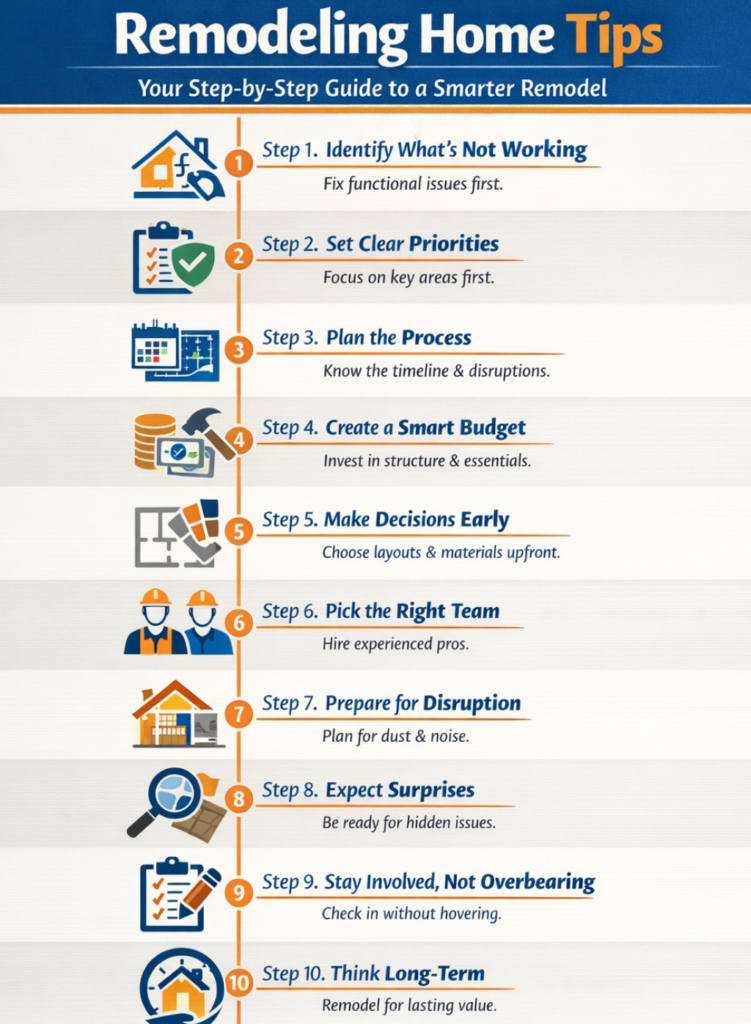
Start by Fixing Problems, Not Just Updating Looks
One of the most common mistakes homeowners make is remodeling for appearance alone.
Before choosing finishes or layouts, step back and ask:
- What specifically isn’t working right now?
- Is the issue space, storage, flow, or maintenance?
- Are you remodeling for daily comfort or future resale?
The most successful remodels improve how a home functions. Looks matter, but function is what you live with every day. Many good tips for home remodeling come down to solving practical problems first and letting design follow.
Don’t Remodel Everything at Once Without a Strategy
Bigger is not always better when it comes to remodeling.
Trying to renovate too many areas at the same time often leads to:
- Longer timelines
- Budget strain
- Decision fatigue
- Higher stress
A phased approach usually works better. Focus on the areas that affect daily life the most—kitchens, bathrooms, entryways, or poorly designed living spaces. Remodeling in stages allows better control and fewer compromises.
Budget Planning Is About Priorities, Not Just Numbers
Homeowners often ask for home renovation budget tips, but budgeting isn’t only about setting a limit—it’s about deciding where money matters most.
Experienced remodelers prioritize:
- Structural and framing work
- Electrical and plumbing updates
- Waterproofing and insulation
- Quality installation
Cosmetic finishes can be adjusted later. Structural mistakes cannot. Spending wisely upfront often prevents expensive fixes down the road.
Make Decisions Earlier Than You Think You Need To
One of the biggest causes of remodeling delays is unfinished decisions.
Before construction begins, you should already know:
- Final layouts and measurements
- Cabinet and storage requirements
- Appliance and fixture locations
- Flooring transitions between rooms
When decisions are pushed into the construction phase, they come with pressure, added cost, and stress. Early clarity is one of the most overlooked remodeling home tips—and one of the most valuable.
Choose a Contractor Who Explains the Process Clearly
A remodel doesn’t become stressful because of noise or dust—it becomes stressful when homeowners don’t understand what’s happening.
A good contractor will:
- Explain the order of work
- Set realistic expectations
- Communicate delays early
- Answer questions without defensiveness
If explanations feel rushed or unclear before the project starts, that’s a warning sign. Remodeling works best when homeowners feel informed, not managed.
Expect the Unexpected—Especially in Older Homes
Even well-planned remodels uncover surprises once walls are opened.
Common discoveries include:
- Outdated wiring
- Plumbing issues
- Structural inconsistencies
- Moisture damage
What matters isn’t avoiding surprises—it’s how they’re handled. Calm explanations, clear options, and transparent communication keep small issues from turning into major stress points.
Living Through a Remodel Requires Realistic Adjustments
Many homeowners underestimate how much a remodel affects daily routines.
If you’re staying in the home:
- Plan alternate work or quiet spaces
- Expect temporary inconvenience
- Adjust schedules during high-impact phases
- Keep communication open about daily needs
Planning for disruption makes it manageable. Pretending life will continue normally usually leads to frustration.
Don’t Micromanage—But Don’t Disappear Either
Trust is critical during a remodel, but so is involvement.
Healthy homeowner involvement looks like:
- Scheduled check-ins
- Asking questions when needed
- Reviewing progress at milestones
Constant oversight slows projects down. Total disengagement leads to misunderstandings. Balance keeps things moving smoothly.
Experience in Project Management Makes a Big Difference
Remodeling isn’t just construction—it’s coordination.
This is where companies like Blue Collar Building Expert Building & Remodeling in Oklahoma add real value. With hands-on experience managing residential remodeling projects across Tulsa, Bixby, and surrounding areas, their approach emphasizes planning, sequencing, and communication—not just finishing work. Strong project management reduces delays, confusion, and homeowner stress throughout the remodel.
Conclusion: Remodel Smarter, Not Harder
A successful remodel isn’t defined by how fast it’s finished or how trendy it looks. It’s defined by how well it improves daily life and how smoothly the process is handled.
The best remodeling home tips come down to this: plan thoroughly, set priorities, make decisions early, and work with professionals who understand both construction and communication. When those pieces are in place, remodeling becomes a controlled process—not a constant source of stress.
If you’re preparing for a remodel, focus on clarity first. The better the plan, the better the experience—and the better the final result.
Frequently Asked Questions
1. What should I remodel first in my home?
Start with spaces that affect daily use the most, such as kitchens, bathrooms, or poorly functioning layouts.
2. How can I avoid going over budget during a remodel?
Set priorities early, avoid mid-project changes, and focus spending on structural and functional elements.
3. Is remodeling in phases a good idea?
Yes. Phased remodeling often reduces stress and makes budgeting more manageable.
4. How involved should homeowners be during a remodel?
Stay informed and engaged without micromanaging daily work.
5. Are surprises during remodeling normal?
Yes, especially in older homes. Clear communication helps manage them effectively.
6. What’s the biggest remodeling mistake homeowners make?
Starting construction before finalizing decisions and understanding the process.